
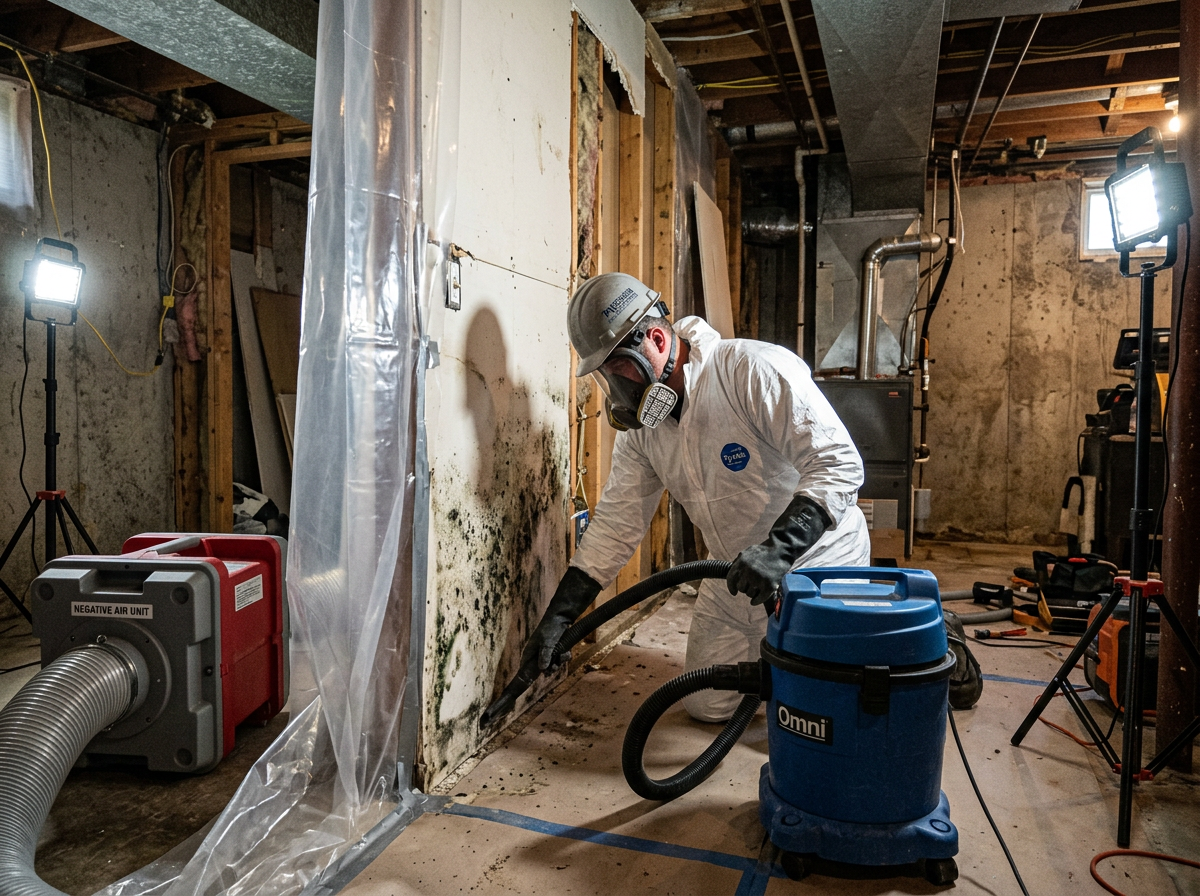
Michigan basements on 42-inch frost lines with heavy clay soils commonly develop hidden mold after combined sewer surcharges or spring thaw seepage. Water enters through cove joints and floor cracks, wicking into drywall, carpet pad, and insulation behind finished walls. Once the visible water recedes, residents often close up the space, trapping humidity that fuels rapid growth on organic materials within days.
Effective remediation starts with isolating the affected area using negative-air containment to prevent spores from migrating to upper levels. All porous materials that contacted Category 3 water must be removed and bagged on site; attempting to dry and save them almost always fails. Air movers and dehumidifiers run continuously while moisture meters track hidden pockets in joists and subflooring before any reconstruction begins.
Mold Remediation Near You — Choose Your City
Every city below has its own local Mold Remediation page with coverage details.
Oakland County
Oakland
Genesee
Macomb County
Macomb
Washtenaw
Genesee County
Ottawa
Wayne
Montcalm
Kent
Kalamazoo
Oceana
Washtenaw County
Ottawa County
Bay County
Bay
The most common failure occurs when homeowners focus only on visible mold without stopping the water source. In Ypsilanti homes near combined sewer lines, untreated backflow during the next heavy rain reintroduces moisture and new growth appears in the same locations. Technicians must locate and document the entry point, whether a failed sump, unsealed cove joint, or missing backwater valve, before final clearance testing.
Why Containment Matters in Local Housing Stock
Finished basements in older Ypsilanti stock often connect directly to living areas through open stairwells and HVAC returns. Without proper barriers and negative pressure, remediation can spread spores throughout the house, turning a contained basement issue into whole-home contamination.
Technician insight
In Ypsilanti, the thing that catches most people out with Mold Remediation is assuming the growth stops once the carpet is pulled. Heavy clay soils keep pushing water through the cove joint for weeks after the rain ends, and if that path is not sealed the mold simply restarts behind the new drywall the following spring thaw.
Hidden Growth Behind Finished Walls After Sump Failure
A Ypsilanti homeowner discovered black growth along the base of a finished basement wall two weeks after a January sump pump outage. Inspection revealed water had wicked six inches up the drywall and saturated the carpet pad behind a couch. Containment was erected, the lower two feet of drywall and all pad were removed, and the cove joint was sealed before drying equipment was placed.
Mold Remediation Services We Offer
✓Post-Flood Mold Assessment
Moisture mapping and hidden growth inspection behind finished basement walls after sewer backup or sump failure events.
✓Basement Containment and Negative Air Setup
Physical barriers and HEPA-filtered negative air machines isolate the work zone from the rest of the home during removal.
✓Porous Material Removal
Safe extraction and disposal of drywall, carpet, padding, and insulation that contacted contaminated floodwater.
✓Moisture Source Correction Guidance
Identification of ongoing water entry points such as cove joints or missing backwater valves before any drying or cleaning proceeds.
✓Antimicrobial Application on Non-Porous Surfaces
Targeted treatment of concrete, framing, and mechanical components after all affected porous materials are removed.
How it works
- 1
Initial Inspection and Containment
Technicians map moisture with meters, establish negative-air containment, and document the water entry point.
- 2
Removal of Contaminated Materials
All porous items that contacted Category 3 water are cut out, bagged, and removed while maintaining containment.
- 3
Source Correction and Drying
Recommended repairs to stop future water entry are noted, then air movers and dehumidifiers dry remaining structure.
- 4
Clearance Testing
Post-remediation moisture readings and visual inspection confirm the area is dry before reconstruction.
Pricing
Scope depends on the extent of hidden growth, square footage behind finished walls, and whether the moisture source requires separate correction; call for an on-site inspection and written scope.