
Grand Haven homes sit on sandier lakeshore soils that handle meltwater differently than clay-heavy areas farther east. Crews work around the seasonal snow load and spring runoff that affects basements near US-31 and M-104.
Access stays straightforward along the main corridors into Downtown Grand Haven and Ferrysburg, letting teams reach both waterfront properties and inland subdivisions without delay.
Here's how our mold remediation work runs in Grand Haven — the same standards we hold across Michigan, delivered by the crew that covers Ottawa.
Mold Remediation Services We Offer in Grand Haven
✓Post-Flood Mold Assessment
Moisture mapping and hidden growth inspection behind finished basement walls after sewer backup or sump failure events.
✓Basement Containment and Negative Air Setup
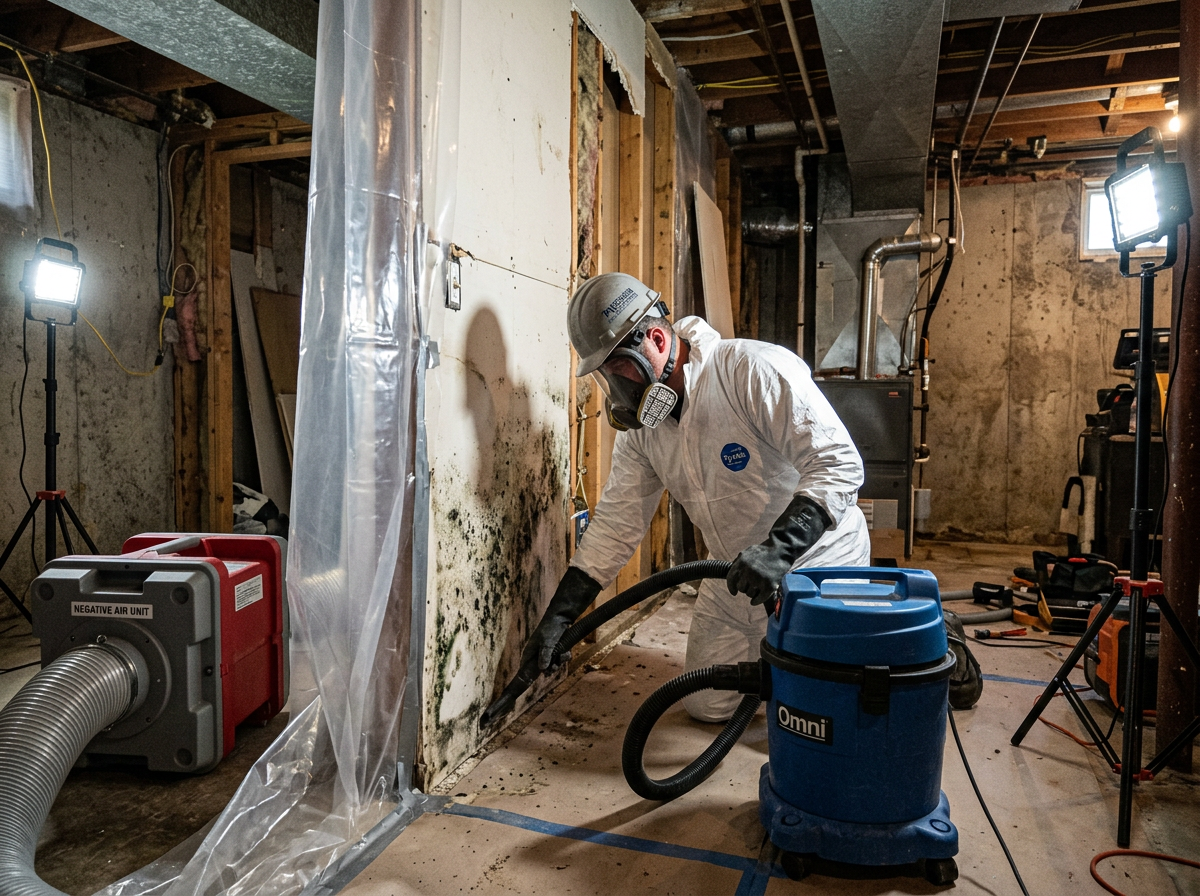
Physical barriers and HEPA-filtered negative air machines isolate the work zone from the rest of the home during removal.
✓Porous Material Removal
Safe extraction and disposal of drywall, carpet, padding, and insulation that contacted contaminated floodwater.
✓Moisture Source Correction Guidance
Identification of ongoing water entry points such as cove joints or missing backwater valves before any drying or cleaning proceeds.
✓Antimicrobial Application on Non-Porous Surfaces
Targeted treatment of concrete, framing, and mechanical components after all affected porous materials are removed.
Michigan basements on 42-inch frost lines with heavy clay soils commonly develop hidden mold after combined sewer surcharges or spring thaw seepage. Water enters through cove joints and floor cracks, wicking into drywall, carpet pad, and insulation behind finished walls. Once the visible water recedes, residents often close up the space, trapping humidity that fuels rapid growth on organic materials within days.
Effective remediation starts with isolating the affected area using negative-air containment to prevent spores from migrating to upper levels. All porous materials that contacted Category 3 water must be removed and bagged on site; attempting to dry and save them almost always fails. Air movers and dehumidifiers run continuously while moisture meters track hidden pockets in joists and subflooring before any reconstruction begins.
How It Works in Grand Haven
- 1
Initial Inspection and Containment
Technicians map moisture with meters, establish negative-air containment, and document the water entry point.
- 2
Removal of Contaminated Materials
All porous items that contacted Category 3 water are cut out, bagged, and removed while maintaining containment.
- 3
Source Correction and Drying
Recommended repairs to stop future water entry are noted, then air movers and dehumidifiers dry remaining structure.
- 4
Clearance Testing
Post-remediation moisture readings and visual inspection confirm the area is dry before reconstruction.
Serving All of Grand Haven
We regularly handle mold remediation jobs near:
- 📍Grand Haven Pier
- 📍Grand Haven State Park
- 📍Coast Guard Festival grounds
- 📍Downtown Grand Haven
- 📍Ferrysburg
Mold Remediation Pricing in Grand Haven
Scope depends on the extent of hidden growth, square footage behind finished walls, and whether the moisture source requires separate correction; call for an on-site inspection and written scope.
Want the full picture of this service? See our Mold Remediation page, or everything we do in Grand Haven, MI.