
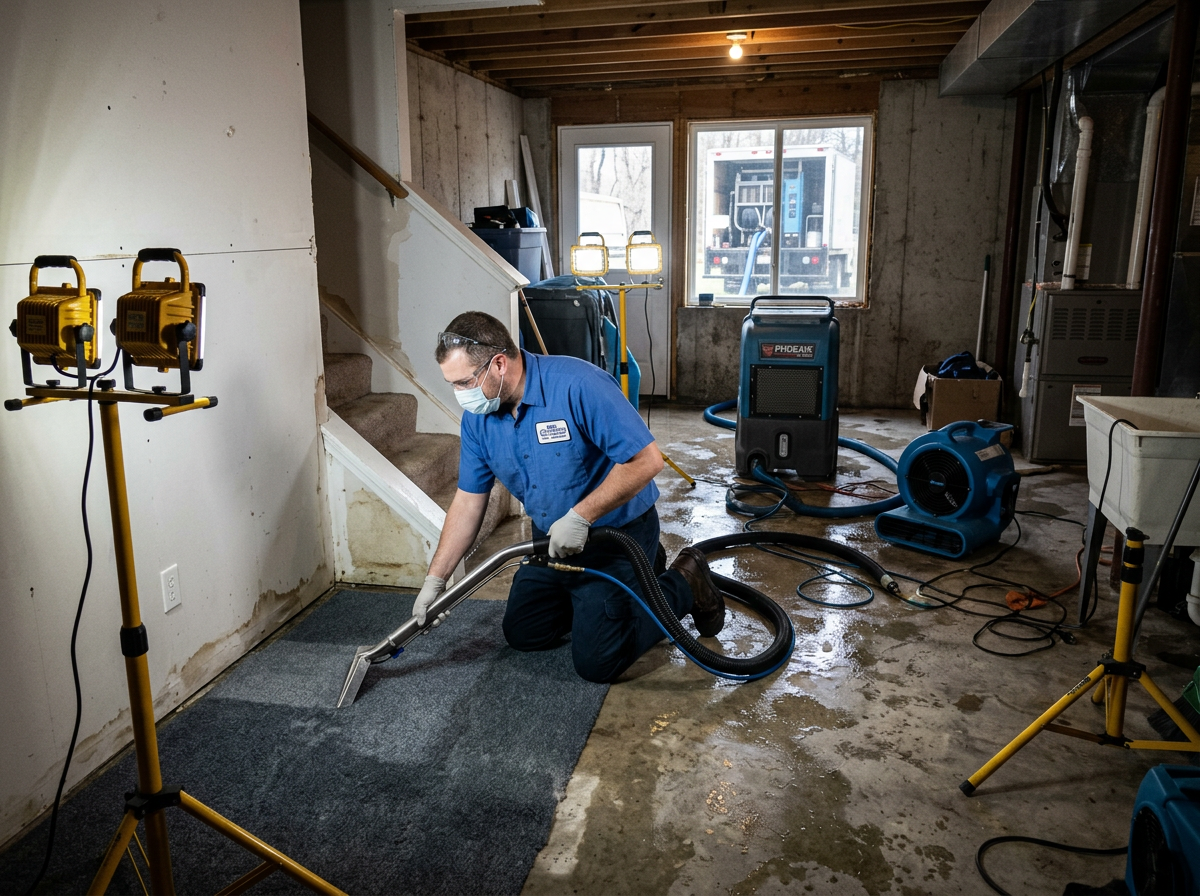
Crystal homes sit on smaller lots around the lake with foundations that sit low relative to seasonal water tables. Crews stage equipment from M-46 and work around the tight access common to lakefront properties.
Winter snow loads followed by spring thaw create the main window for water intrusion, so drying and monitoring plans are built around the short window between melt and summer recreation season.
Here's how our water damage restoration work runs in Crystal — the same standards we hold across Michigan, delivered by the crew that covers Montcalm.
Water Damage Restoration Services We Offer in Crystal
✓Sewer Backup Response
Category 3 extraction and disposal of sewage that enters through floor drains during combined sewer surcharges common in Detroit metro storms.
✓Ground Water and Seepage Cleanup
Removal of water migrating through cove joints and wall cracks in clay soils, followed by drying of affected finished basement areas.
✓Sump Pump Failure Response
Standing water extraction and structural drying after power loss or mechanical failure during heavy rain or lake-effect events.
✓Finished Basement Restoration
Selective demolition, moisture verification, and drying of carpet, drywall, and insulation while preserving salvageable non-porous surfaces.
✓Contents Pack-Out
Documentation, removal, and temporary storage of salvageable items from flooded basements to allow full access for drying.
In Michigan homes with finished basements built on clay soils and 42-inch frost lines, water enters through three distinct paths that each demand different handling. Sewer backups from combined systems in the Detroit metro push Category 3 water up floor drains and standpipes, immediately saturating carpet, drywall, and insulation that must be removed. Groundwater seeps through cove joints and cracks during spring thaw or heavy rain, while sump pump failure during outages leaves standing water against foundation walls. Extraction begins with pumps and wands, followed by moisture mapping to locate hidden saturation behind finished surfaces before any wall closure.
Technicians place air movers and dehumidifiers in patterns that account for the tight floor plans and low ceilings common in Ypsilanti basements, running equipment until moisture meters read dry on both sides of framing. Porous materials like particleboard cabinets and carpet padding are discarded on arrival because they hold contamination and prevent drying. Finished basements limit access, so baseboard and lower drywall sections are often cut to allow airflow; skipping this step leaves hidden mold growth that surfaces months later. Work stops only after verification confirms no elevated moisture remains that could damage new finishes.
How It Works in Crystal
- 1
Initial Assessment and Safety
Technicians inspect entry points, classify water category, and establish safe access before any extraction begins.
- 2
Water Extraction
Pumps and wands remove standing water in stages to protect foundation walls from external soil pressure.
- 3
Material Removal and Drying
Porous materials are discarded, then air movers and dehumidifiers are positioned for complete moisture removal.
- 4
Verification and Documentation
Moisture meters confirm dryness on all surfaces before any wall closure or final cleanup.
Serving All of Crystal
We regularly handle water damage restoration jobs near:
- 📍Crystal Lake
- 📍M-46
- 📍Crystal Lake shoreline access points
Water Damage Restoration Pricing in Crystal
Scope and cost are determined after inspection of water source, affected materials, and drying requirements; call for details.
Want the full picture of this service? See our Water Damage Restoration page, or everything we do in Crystal, MI.