
2026-09-13 ·
Drying Techniques for Basements in Michigan's Humid Fall Season
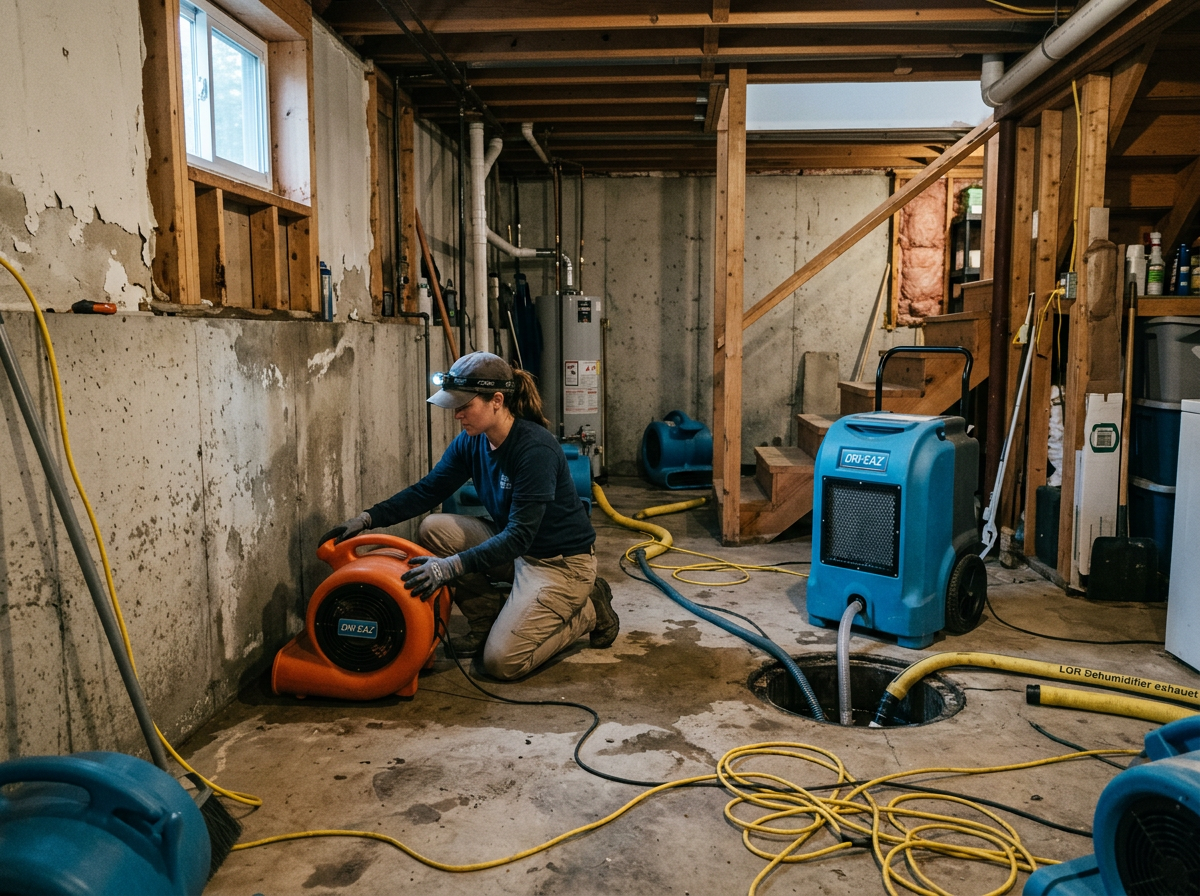
Michigan basements after fall flooding typically require 5 to 8 days of active drying when indoor relative humidity stays between 60 and 75 percent and outdoor temperatures fall into the 50s. Proper placement of dehumidifiers and air movers, combined with daily moisture readings, keeps conditions from worsening as cooler air holds less moisture.
Monitoring Initial Moisture Conditions
Fall rains in southeast Michigan often leave standing water against clay soils that press against foundation walls. Start by taking moisture meter readings on concrete floors, lower wall sections, and any finished materials within the first 24 hours. Track relative humidity in the space with a digital hygrometer and note when levels exceed 55 percent, since that threshold slows natural evaporation. Record readings at multiple points each day to see whether levels are dropping or holding steady. These baseline numbers guide decisions on equipment runtime and whether finished surfaces need removal. Homeowners in Ypsilanti and nearby areas can compare readings against the 42-inch frost depth line to understand how deep moisture may have traveled during earlier seasonal events.
Setting Up Dehumidification Equipment
Standard household dehumidifiers struggle once outdoor dew points rise in September and October. Use commercial-grade units rated for at least 70 pints per day and position them to pull air across the wettest surfaces first. Set the target relative humidity between 45 and 50 percent and empty collection tanks or route condensate lines to a floor drain before the unit shuts off. Run units continuously rather than on timers, because intermittent operation allows humidity to rebound overnight when temperatures drop. Check coils daily for frost buildup, which reduces efficiency in cooler basements. Pair dehumidifiers with the right number of air movers to create steady airflow across floors without creating cold spots that condense moisture on walls.
Improving Air Circulation Patterns
Stagnant air pockets form quickly in finished basements common throughout Washtenaw County. Place air movers at 45-degree angles along walls so they push moist air toward dehumidifier intakes rather than blowing it upward into living spaces above. Rotate equipment positions every 12 to 24 hours to reach areas behind cabinets or under stairs that receive less airflow. Keep doors to adjacent rooms closed to maintain negative pressure in the basement and prevent moisture from migrating upstairs. Avoid opening windows during humid fall days, since outdoor air often carries higher moisture content than the conditioned basement air. Consistent circulation helps prevent the musty odors that develop when moisture lingers near 60 percent relative humidity for more than three days.
Handling Fall-Specific Humidity Challenges
Lake-effect moisture from the Great Lakes frequently keeps dew points elevated through November, slowing evaporation even after visible water is removed. Seal off any sump pits or floor drains that may allow additional humidity to enter during rain events. If Category 3 water from surcharged sewers is involved, increase ventilation between drying zones and living areas while still maintaining the 45 to 50 percent target inside the work zone. Monitor for condensation on cold water pipes or windows, which signals that surface temperatures have dropped below the current dew point. Adjust equipment placement rather than raising temperature set points, because added heat can drive moisture deeper into porous materials before it evaporates.
For step-by-step guidance on how long drying may take under local conditions, see How Long Does It Take to Dry a Flooded Basement in Michigan. Property owners dealing with repeated events can also review Understanding Local Drainage Issues in Ypsilanti During Heavy Rains for context on why water returns. When moisture readings remain elevated after a week of equipment use, contact Michigan Flood Response through the flooded basement cleanup page or the broader water damage restoration service for on-site assessment.